
Your attention has always been valuable but ever since advertising made the jump from television to smartphone, the price of attention has skyrocketed.
In the 1950s televisions started making their ways into the homes of millions across the Western world. A new piece of technology that was captivating yet left others feeling skeptical of this new "fad." Many claimed it would never last and that it would be gone just as quick as it arrived. As we all know now, they were very wrong.
Unlike those who doubted the power of the T.V., marketing executives were very quick to understand its strengths. Companies started dumping millions of dollars into commercials and marketing campaigns dedicated to flooding homes with advertisements. Very similar to what we see today, history repeats itself. The advent of the smartphone made a portable advertising machine. However, the rise in people glued to their screens means an increase in competition for marketers. A competition for your attention.
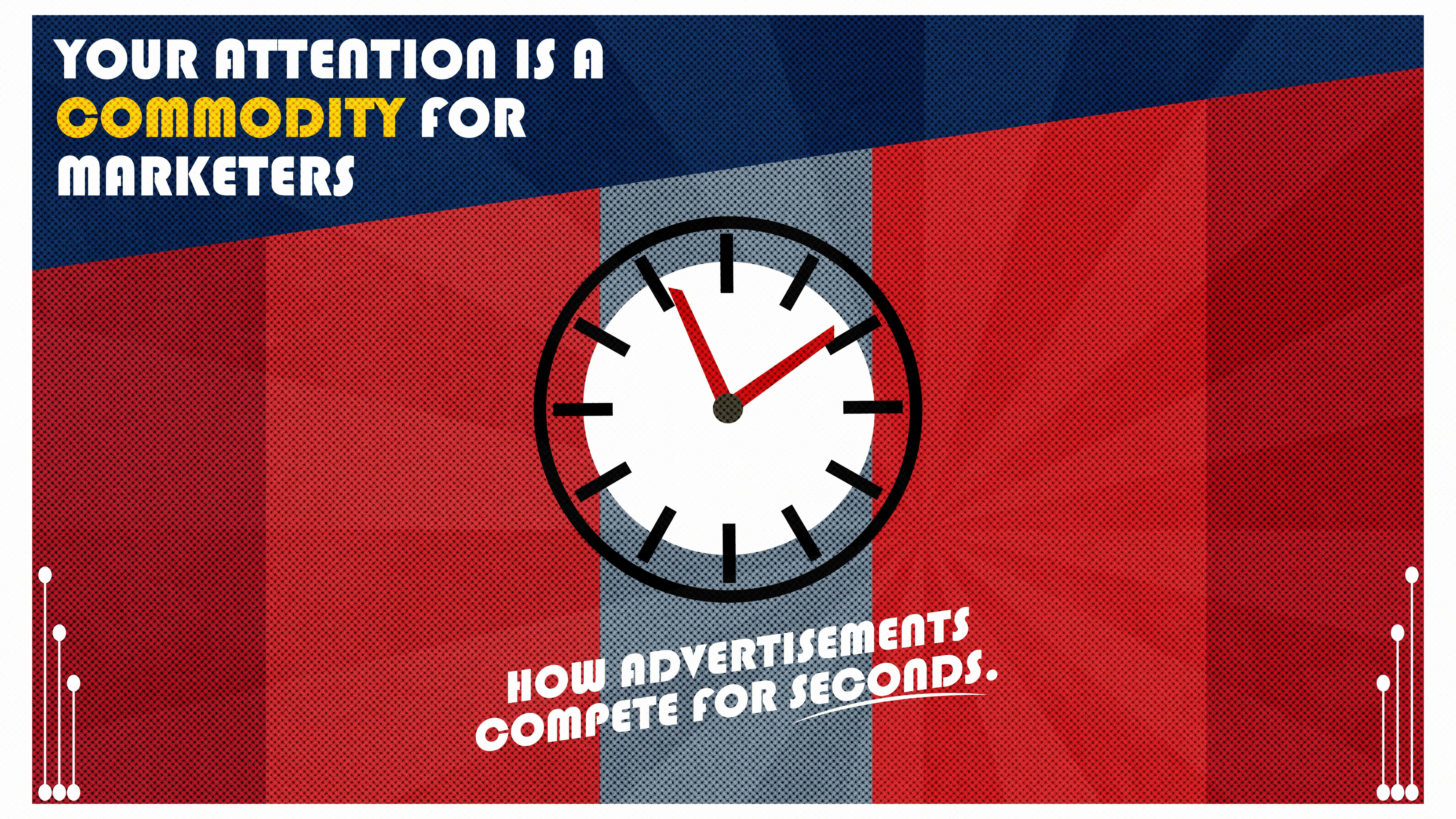
Most would say that marketing has changed, yet that's not really true. On the surface, the way marketers approach their problems has shifted, but at the fundamental core of what marketing is, it's largely the same. What has really changed are the advertisements themselves. Attention has always been a valuable asset, but what's happened in the past decade or so is the price of attention has skyrocketed. Your attention span is more valuable than you can imagine. Recent studies show a roughly 75% completion rate for videos less than 15 seconds long and a 40% completion rate for videos longer than 30 seconds. These same studies also back the claim that the average attention span towards digital mediums is around 8 seconds, though it seems to be closer to 5. These are extremely low timeframes, and with a lower attention span comes a higher volume of content. This leaves companies with one option: high volume, simple, and quick advertisements.
The days of large budget commercials with massive studio lights, effects, and clever introductions of products are fading. In place of them is UGC (User-Generated Content), case study videos, and static ad creatives with animated overlays. Though companies still do invest time and money into large productions, the bulk of an ad campaign sits on the shoulders of quick delivery. After all, why would a company post a polished commercial once a week when they can produce daily material for a percent of the cost with arguably much better results?
So if we go back to the 1950s and talked to the marketers of the time, would they predict advertising would evolve into what it is today? Probably not. But the same applies to our current age. No one can predict what advertising and marketing will look like in the next 50 years. However, we can adapt and adjust to current trends and systems that are presented before us. As consumers, we must understand when our attention is being sold at auction, and as marketers, you must know how to handle such a valuable commodity.